Tuesday, December 13, 2011

The "Obvious" Answer To Controversy? Avoid Real Life.


LGBT-themed YA books have certainly seen their share of disputes, and topics like alcohol abuse, sex, and really anything Judy Blume ever wrote about have endured an equal amount of argument among teachers, librarians, and parents. For some, these topics in general are just "too dark" for young adults.

The Wall Street Journal recently posted an article relaying the apparent horrors in today's YA lit. "If books show us the world," reporter Meghan Cox Gurdon says, "teen fiction can be like a hall of fun-house mirrors, constantly reflecting back hideously distorted portrayals of what life is." Drugs. Incest. Dysfunctional families. The article insists authors try to reverse this trend, and go back to books where topics weren't as violent. Without change, she believes today's YA audience will be in trouble. "If you think it matters what is inside a young person's mind, surely it is of consequence what he reads," Gurdon continues.

Yes, and by hiding life topics from teens, youth won't possibly encounter controversial issues in film, television, the Internet, and in real life. Let's make sure to get rid of a safe learning environment, and prevent the opportunity for teens to ask questions.

(The article goes on to list two recommended reading lists: 1) Books For Young Men and 2) Books For Young Women. Because apparently recommending books to both genders is too much.)

Of the many dark topics that some adults hope to keep quiet from teens, a prominent controversial theme is suicide. As such, author Michael Thomas Ford's Suicide Notes met doubtful readers in 2008. The book follows a teenager named Jeff through a psych ward after his failed attempt at taking his own life. Jeff, struggling with his identity and sexuality, meets a group of young adults who have all survived intended suicides. Ford successfully navigates both the topics of homosexuality and suicide in a way I hope other authors attempt; he treats each issue as a complex idea, rather than diseases that the protagonist tries to hide. As Teen Ink says, "Suicide Notes is able to make something beautiful from something normally regarded with hesitation or disdain." Instead of avoiding the two complex issues altogether, as Gurdon suggests, Ford shows his readers that life involves challenges, and there are healthy, available solutions.

Gurdon's article exploded throughout the media when it was published in June 2011. Authors, bloggers, teens, and adults alike viciously opposed Gurdon's ideas. Author Jay Asher (Thirteen Reasons Why, also a suicide-themed novel) explains that it's not about censorship or pride. "For writers," Asher says, "it's not that. [A lot of adults] don't understand the power of books dealing with these subjects." Both Ford and Asher try to show hesitant readers that knowing how the world works provides the opportunity to learn and understand. "It doesn't mean that your teen is going to be facing these things just because they're reading about them," Asher says.

If YA is a crucial resource for teens, to suggest censorship or sugarcoating topics is only a disservice. Authors and activists have been working to keep Gurdon's recommendations out of literature for good.

Recent controversial YA books to check out
(just to stick it to the man)...
But I Love Him by Amanda Garcia
Lie by Caroline Bock
Shine by Lauren Myracle

Sunday, December 11, 2011

Time After Time, Lauper Offers Resources for Queer Teens


With a tip of her hat towards Dan Savage's It Gets Better project, songwriter and LGBT activist Cyndi Lauper has created a similar project called the Give a Damn campaign. The artist sought a means to both raise awareness about issues concerning gay teens and educate viewers of all sexualities on how to help.

The Give a Damn Campaign was founded in April 2010. The website contains statistics, articles, and information on the biggest problems LGBT teens face, like homelessness, abandonment, and bullying. "Imagine sending your child off to school everyday, knowing once they're there, they'll be called names, get threatened and shoved, even kicked or punched," the website asks of straight/non-questioning viewers. "Imagine if your brother or sister, or your nephew, niece, grandson or granddaughter told their teachers about the bullying - and their teachers didn't do a damn thing about it." Unlike other teen issue webpages, the Give A Damn site takes the conversation a step farther - it speaks widely to both struggling youth and unknowing citizens and provides a wealth of information for anyone interested in LGBT topics. It provides a means to help, though conversation starters, places to volunteer, and ways to donate.

Perhaps the most helpful link for visiting teens, however, is the "Personal Stories" section of each page. Young adults from every background have submitted their battles with parents, teachers, peers, and society. On the "Youth Homelessness" tab, a boy named Ryan describes the ongoing fight with his family. Ryan's parents verbally and emotionally abused him, related his existence to that of a child with Down Syndrome, and forced him into a conversion therapy organization called the National Association for Research and Therapy of Homosexuality to be "cured." On the campaign's site, Ryan pleads with viewers: "The lives of your friends, that kid down the street, your brother, sister, mom, dad, aunt, uncle or 6th cousin twice removed, count on you, so please, join all of us, and Give a Damn."

In a similar fashion to It Gets Better, Lauper extends the project into a Youtube channel where celebrities and fellow activists can upload clips about supporting youth who are enduring hate crimes, unfriendly faces, and a sense of loss. "It is time that life, liberty and the pursuit of happiness is afforded to everyone equally," the channel states. "Get Informed. Get Involved. Give a Damn!"

To donate to Give a Damn, please click here.

Friday, December 9, 2011

Book Review: Markus Zusak's "The Book Thief"


The rise of Nazi Germany has been told through many different voices - documentaries, films, a young girl in a secret attic. The narrator recounting the reign of Adolf Hitler in The Book Thief, however, is Death. Markus Zusak's 2006 novel follows the (un)life and times of Death as it works double-time throughout World War II, and becomes infatuated with an eleven-year-old German girl, named Liesel Meminger. A.K.A. The book thief. Meminger learns to read and write from her foster father, steals books only when necessary, and befriends Max Vandenberg, the Jew her foster family has been hiding in their small basement. The books Meminger comes to steal become incredible coping tools for the small town dealing with the war.

Structure: 5 out 5 stars

Zusak breaks his novel into ten parts. Each new part lists six mini-chapter titles, which are both telling and intriguing. The reader easily follows the multiple story lines, and enjoys the short, powerful sections of this 550 page adventure. The action never lulls, from Meminger's fruit-stealing escapades with her best friend, Rudy Steiner, to the jam-packed action of WWII. Zusak sets up an incredible novel.

Character: 5 out of 5 stars

This is the first time I've read a book by one narrator, realized I was hearing the story of a different character, and didn't feel I was getting the short end of either stick. Death's account, both historically and emotionally accurate, fills in the details for Liesel Meminger's life. We encounter the souls Death must retrieve and feel his own weary tale. At the same time, the reader learns about Meminger's habits, fears, dreams. Through both characters, we see inside the mind of Hans Hubermann, the girl's accordion-playing heart-of-gold foster father, Max Vandenberg, the 24-year-old Jewish writer hiding behind a stack of paint cans in the basement, and many other unique and passionate characters on Himmel Street in Munich. With so many people around - the mayor's wife, the crazy next-door neighbor, the shop owner down the street - the reader feels every minute of Nazi Germany's heartaches and victories.

Voice: 5 out of 5 stars

Perfect, if ever a narrator's voice could be. Death is witty, sassy, and sorrowful. He feels the burden of his profession. One of Zusak's finer ideas in this book was to be real. Death, as it would seem, does not sugar coat anything. He prepares the reader for a pending character's death, a horrible accident, or a bombing far in advance. Death's periodic announcements are well-received by the reader, who appreciates the heavy and specific foreshadowing, but is still surprised by the event itself. The author provides a powerful voice to lead his story, a voice which readers respect.

Overall, this is one of the best books I've read this year. I highly recommend it to both adult and young adult readers, and anyone who wants a good kick out of death, for once.

The Book Thief was published in 2006 by Knopf, and has won multiple honors since then, including the 2007 American Library Association's Best Books for Young Adults award.

Tuesday, December 6, 2011

Judy Blume: FOREVER Banned, Forever Censored

Beloved young adult, middle grade, and adult author, Judy Blume, is no stranger to censorship. Throughout her career, Blume's books such as Forever, Blubber, and Are You There God? It's Me, Margaret have been banned from schools and libraries all over the country due to controversial material.

Blume spoke to NPR in recent weeks regarding banned reading, and books with real life topics like sexuality, smoking, and abuse. "[Censorship] is contagious, the desire to control everything in your children's lives, including what they read," Blume says. "But I think it's more than that. It's what we don't want our children to know, what we don't want to talk to our children about, and if they read it, they'll know it, or they'll question it."

The author published her first book, The One in the Middle is the Green Kangaroo, in 1969. Since then, Blume has been named one of the most banned children's authors in the United States by the American Library Association, and the author has faced controversy over content related to body image, religion, divorce, rape, and many other topics.

Her 1973 novel Deenie describes a seventh grader's scary scoliosis diagnosis and the way Deenie copes with her medical issue, including whether or not her crush will find her new back brace repulsive. Among other things, the novel contains conversations regarding intimacy, masturbation, and menstruation. In 2004, Spring Hill Elementary in Brooksville, FL removed Deenie from public use. Many parents were outraged by the novel. A mother complained that "such content is not appropriate, in any form" at a middle school. Students were only able to check out Blume's book from the library with a written note of parental consent.

Are You There God? It's Me, Maragaret (1970) is one of Blume's most banned novels. The book follows sixth grader, Margaret, while she journeys to find a suitable a religion (with a Christian mother and Jewish father). Along the way, the narrator purchases her first bra, experiences her first period, and debates whether or not she should speak up to her friends with her different, independent opinion. Shortly after the book was published, an irate woman phone Blume and asked if she was a Communist, then hung up the phone. "I never did figure out if she equated Communism with menstruation or religion," Blume says on her website.

After surviving several literary confrontations, Blume joined the National Coalition Against Censorship, which was founded in 1974. The organization combines the efforts of over 50 non-profit arts, literary, and educational groups, as well as many individuals, in the fight to "promote freedom of thought, inquiry, and expression and oppose censorship it all its forms." NCAC has tackled controversy regarding hate speech, music, science, visual art, youth, the LGBT community and many other issues. Much of the time, the NCAC deals with book censorship among middle grades and elementary schools, and often Blume is a part of it.

As an author, Judy Blume continues to write about characters going through puberty, getting married, or simply trying to survive. Many of her books have been banned, but she remains an advocate for free speech, and even offers tips to kids, teachers, librarians, and writers about what to do if they face censorship. When it comes down to it, Blume is hopeful for change - the author notes on her website that censors might feel differently about her books if they read letters young adults had sent her. One of Blume's favorites:

Dear Judy,
I don't know where I stand in the world. I don't know who I am.
That's why I read, to find myself.
Elizabeth, age 13

Sunday, December 4, 2011

LGBT Figures and Celebrities: Where are the Queer Biographies for Kids?


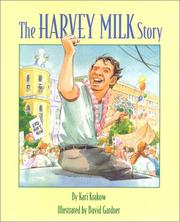
Steve Jobs - Walter Issacson's biography of the late, great inventor - has been at the top of book-selling charts for weeks. Other great biographies documenting the lives of Michelle Obama, Laura Hillenbrand, Keith Richards, Harvey Milk, and Mickey Mantle can be found at any local library or book store. Of the leaders listed above, however, only Harvey Milk's story is available in the form of a children's biography. Not only that, Milk's story is one of the rare LGBT biographies available for children.

Teacher Dana Rudolph wanted her third graders to read about Frank Kameny, one of the founding fathers of the gay rights movement, before the class went to a memorial service near the U.S. Capitol this year. But there is no kid's biography available for Kameny, or any other leader in the movement. Rudolph writes in Bay Windows that she is disappointed for two important reasons - historical and practical.

One: "Because children deserve to know about all of the major civil rights movements of our time," Rudulph says. "They deserve to learn, when relevant, if and how people's significant relationships and struggles against inequality impacted their lives, no matter what the reason for their fame." Teachers have the desire to educate their students about major historical events, and need the resources to do so.

Two: "For young people who are LGBT or questioning, or who have LGBT parents, it is important to see LGBT people achieving in many areas of life." How can teachers tell kids to believe in their dreams when information about LGBT role models and their accomplishments are not readily available? More than that, teaching students of every sexual orientation provides awareness, knowledge, and, ultimately, acceptance.

In 2009, the National School Climate Survey found that students in schools with queer-friendly curricula were "less likely to report hearing homophobic remarks or negative comments about gender expression, and less likely to feel unsafe or experience victimization because of their sexual orientation and gender expression." Knowledge is power, and students who learn about the diversity of religions, ethnicities, backgrounds, and sexualities are more likely to accept others as different.

After all, that's why California now requires gay history lessons in schools. As of July 2011, all California schools will begin incorporating lessons about LGBT historical figures and events, and will continue to do so from here on out. New textbooks are being printed across the state to include information about crucial queer milestones. Besides the obvious need for inclusive knowledge, the New York Times also notes the law was promoted in big part "to combat bullying of gay and lesbian students."

"There is an increasing awareness in the public and among elected officials that we have to do something to address the problems of bullying, and the negative consequences" for queer students," says director of the Gay-Straight Alliance Network, Carolyn Laub. While some politicians like Republican assemblyman, Tim Donelly, oppose the idea, the widespread response has been positive and hopeful.

"This is definitely a step forward," says Mark Leno, California's first openly gay male state senator. "We are failing our students when we don't teach them about the broad diversity of human experience."

But as Rudolph points out, this new curricula would be much simpler in the younger grades if LGBT biographies for children were made available. She urges publishers - both independent houses and big time distributors like Scholastic (who have printed queer fiction in the past) - to embrace the demand. "We may not have won full LGBT equality yet," Rudolph says, "but we have had many wins along the way. It is time that we start to write LGBT history -- for all ages -- and pass on some of those victories to the next generation."

Friday, December 2, 2011

A Mic. A Stage. A Pen. A Page.


For me, there's nothing as powerful as kids finding hope in the arts. Slam poetry embodies performance, literature, creativity, and teamwork, and no one does it better than Chicago: a low-income high school junior puts down a gun to join a family of poets who speak the truth about everyday life. A 17-year-old girl works through her difficult childhood through words in a notebook. An inner city African-American teen teaches his peers about respecting women in spoken word. This is Louder Than A Bomb.

Now in its 10th year, the annual Chicago event is the largest youth poetry slam in the world. Louder Than a Bomb - founded by Youth Chicago Authors artists, Kevin Coval and Anna West - has a simple, but powerful goal: "bring teens together across racial, gang, and social economic line" where young adults embrace "self-expression and community via poetry, oral story-telling, and hip-hop spoken word." Every year, teenagers from Forest Park to Evanston to the West Loop to 116th street come together to share their words and their stories. Each team presents four individual poems and a four-person group piece.

In 2010, directors Greg Jacobs and Jon Siskel released their documentary Louder Than A Bomb, which followed four high school teams as they prepared for the 2008 Chicago competition: poets Nate, Adam, Nova, and a group called "the Steinmenauts." Four unique story lines from four different points of view.

For everyone in Louder Than A Bomb, Nate Marshall is a legend. He's been in the competition the longest, and leaves his audience overwhelmed by his passion and speech. In 2007, he performed a poem called "Look." Onlookers jumped to their feet, cheering the poet's lines like, "my ego is Langston huge"..."but a mic, a stage, a pen, a page helped end my rage" (see a slightly older Marshall perform the piece on the New York Times website). Marshall is a son, uncle, brother, friend, but mainly, a teacher. He offers his words to his peers, but in turn, wants them to learn how to fully express themselves. 2008 was the last year he could compete. Instead of concentrating on winning his final competition, he dedicated his time to the younger members of his team. Marshall wanted the students to learn the raw sense of slam poetry so they could continue to work, write, and teach each other long after he left the school. Slamming is about a group effort.

Even so, his most famous line speaks for itself: "like FDR's New Deal, I'm gonna be the first spoken word brotha with a shoe...deal."

On the other side of the city, the Steinmetz "Steinmenauts" team enjoyed its first place win in the first year they entered, 2007. Many of the team's poets have nothing else but poetry - not a good family life, money situation, or grade point average. But they have words and each other.

In the 2008 competition, the Steinmenauts group piece called "Counting Graves" brought a whole new meaning to spoken word. When the students took the stage (in person and through the documentary), they "wrest[ed] us into the mind of a teen grieving his mother and brother murdered in a drive-by intended for him," said Kamaria Porter of Filmspotting. "This piece, more than any other, embodies the purpose and possibilities of slam poetry." Watch the original footage of "Counting Graves" here.

Louder Than A Bomb brings students of different backgrounds, ethnicities, religions, and families together to share mutual words and experiences. Judges rate their poems, but most teens are there for the friendship, the passion, and the stories. As the competitors tell each other every year, "The point is not the point. The point is the poetry."

The 2012 Louder Than a Bomb finals are March 10, 2012 at The Vic.

Check out the film's website for information about upcoming screenings.

Wednesday, November 30, 2011

A Tale of Two Professional Hats


For many authors, the goal is just to get published. Others aim higher - writers shoot for novels on the New York Times Best Seller List, contracts with big time print houses, and a name that's familiar in their literary genre. Award-winning author, Lauren Oliver, has achieved all that before the age of 29. And to top it off? She recently co-founded a book development company that has gained massive media attention.

As an author, she goes by Lauren Oliver. As an editor, she goes by her real name, Lauren Schechter. The reason for the double name, she told Bloomberg Businessweek, is because "she wants to keep the roles of author and editor/entrepreneur separate."

As an author, Oliver's first two books, Before I Fall (2010) and Delirium (2011), have both been on the NY Times Best Seller List, and Fox 2000 has picked up both novels to be made into film. On the editor side of things, Schechter's new company Paper Lantern Lit is growing. PPL is about "building new voices," she says. The editor describes the company as a "literary incubator" for developing fresh author voices.

Paper Lantern Lit is interested in three principles: "versatility, integrity, and passion." Co-founders Schechter and Lexa Hillyer have made their organization stand out in many ways, the most distinguishing that PPL is a literary developing company, not a publishing house. In short, Oliver and Hilley explain on the PPL website that they "are interested in making books...not in manufacturing books - the paper, the glue, the covers, the pages. [They] leave that to the publishing giants. Instead, [they] develop stories. Paper Lantern Lit collaborates with great up-and-coming writers to help bring those stories to life."

So far, both of Oliver's/Schechter's career paths are blooming individually, but also cross each other. Oliver's latest book, Liesl and Po, just hit the middle grade lit world in September and Pandemonium (the second book in her Delirium trilogy) is due out in February; Schechter's company has sold more than 20 young adult books since its origin in 2010. When it comes down to it, though, the author/editor just cares about good stories, good books, and good authors. "A writer, at base," she said in a recent interview, "must understand people."

Check out the Paper Lantern Lit website here.
Pre-Order a copy of Pandemonium here.

Sunday, November 27, 2011

Cyber Monday! Shop at Independent Bookstores for Gender Bending Material


As holiday gift shopping shifts into full swing, a wide variety of new ideas appear on everyone's wish lists. Fancy electronics. Gift cards. Gender neutral picture books.

Children's books that don't follow the hetero-normative, gender-stereotyped households can't often be found in big chain stores like Barnes & Noble. But independent shops like The Book Beat in Oak Park, IL will frequently provide a wider range of viewpoints and content. For example, Mary Hoffman's 2011 The Great Big Book of Families. The picture book features illustrations of the different ways families might be put together: working mom, working dad, two fathers, adoptive parents, different incomes, different foods, different religions, different ethnicities. In fact, the book starts by showing an example of what households often don't look like: a blonde smiling family with a picket fence.

For 29 years, The Book Beat has sold books that other companies won't, particularly children and teen books with an LGBT theme. The shop says in their store statement that they "hope to continue offering our community a creative bookstore that is a brighter artistic alternative to the cookie-cutter retailers."

At The Book Beat, you can find other refreshing titles like Cheryl Kilodavis' My Princess Boy, Alex Sanchez's Boyfriends with Girlfriends, and Leslea Newman's Donovan's Big Day (about a boy who gets ready to serve as ringbearer at his two moms' upcoming wedding).

Venture farther into Chicago to Unabrigdged Bookstore, which has the following categories on their website: Sale Books, Coffee Table Books, Gay Books, Children's Books. On their home page, they state that "it's safe to say that Unabridged is the only bookstore in the Chicago area where a shopper can buy the latest issue of a gay magazine, a copy of children's classic Goodnight Moon or newest title, and pick up the latest literary fiction & non-fiction sensation, all in one stop."

Julia Music, a queer Chicago mom, recently spoke with Pride Source about shopping for LGBT children's books. Regarding her son's favorite picture book, Liz Garton Scanlon's All the World, Music said that "it's important for children to see their world reflected in the literature they read."

Small Business Saturday seemed to be successful all over the country. Do yourself a favor and extend that tradition into Cyber Monday tomorrow - check out some local establishments' websites.

Saturday, November 26, 2011

The Dragon Lady Has Left the Building


Beloved young adult author, Anne McCaffrey, passed away on Monday. Many fans, readers, and writers were sad to see "The Dragon Lady" go. She was 85, and one of the most influential female voices in science fiction.

McCaffrey had an amazing following throughout her career. Her first trio of books were intended to be just that, a science fiction trilogy: Dragonflight (1968), Dragonquest (1970), and The White Dragon (1978). But McCaffrey quickly gained attention and a heavy fan base. Her Harper Hall Trilogy appeared almost immediately: Dragonsong (1976), Dragonsinger (1977), and Dragondrums (1979). The public named McCaffrey "The Dragon Lady" around that time.

Besides the overwhelming success of her Dragonriders of Pern series, McCaffrey also wrote many successful works of fiction, including her 1967 novel, Restoree, which the New York Times called "a satirical work of science fiction for adults [which] lampooned the genre's portrayal of women as helpless chattel." Of the novel, the author said that "she wanted to write a female character who wouldn't be the victim and need a hero to save her, but who would be a hero herself and fight for her own survival." In all her books, the author pushes for female heroines and agency for women.

After all, McCaffrey was the first woman to win the top two prizes for science fiction writing: a Hugo, which she won for her 1968 Weyr Search and a Nebula for her 1969 Dragonriders. Both novellas later became a part of the Pern series.

The author once wrote in her 1977 Dragonsinger (to the female protagonist), "There's something wrong in not appreciating one's own special abilities, my girl. Find your own limitations, yes, but don't limit yourself with false modesty."

Readers and writers will miss McCaffrey, a strong female voice and a unique author. The author passed away at her home in Ireland, where she had lived since the 1970s. A home she called "Dragonhold," because she says it had been paid for by dragons.

To read more about the inspirational author, check out Robin Roberts' biography, Anne McCaffrey: A Life With Dragons.

Friday, November 25, 2011

Book Review: Robert Ward's "Shedding Skin"


Robert Ward channeled a bit of future David Sedaris in his 1972 novel, Shedding Skin. In a series of comical but heartbreaking vignettes, Ward tells the story of a young man named Bobby, from adolescence through the first stages of adulthood. From the basement of a Baltimore home to the mountainside cabin of a crazy family named the Stumps to a hippie commune in Haight-Ashbury (in a world that reveals hints of queer identity), the protagonist truly discovers himself in the most ridiculous coming-of-age story I have ever read. As the author says in the book's final chapters, he "just wanted to find a good skin that [he] could wrap up in, be safe in. Now they are trying to sell [him] another new one - the radical skin." Amid drunken peers and 60s counterculture, Bobby forms a unique worldview.

Structure: 5 out of 5 stars

Ward sets up the perfect book. Chapters are short, powerful, humorous, and action-packed. While, at the beginning, the reader spends a lot of time wondering what is fiction and what is fact (i.e. was carrying the Taco sculpture a life event or a drug-induced fantasy?), the reader quickly pushes aside logic and just enjoys the tumultuous story.

Character: 4.5 out of 5 stars

Bobby is the sole narrator, which works out just fine. The reader doesn't become too attached to anyone else. The protagonist is good company, and he meets a crazy crew. Characters are introduced and then left by the side of the road (sometimes figuratively, sometimes literally). However, the reader rarely feels the loss of a new friend or lover because Ward so quickly brings in a new point of interest. Throughout the book, the author will reference a past character and the reader will remember with fond nostalgia about an earlier chapter, but then move forward, the same way the protagonist does. In this way, the story still feels whole.

My only wish was to hear more about Bobby's father in the book's conclusion. The author draws such powerful father-to-son parallels in the beginning, but then only touches on those points at the end. The reader walks away satisfied, but would have enjoyed an ending tie.

Voice: 5 out of 5 stars

The protagonist is a sensational storyteller. He is witty, charming, and mostly a nerd. From grade school onward, Bobby encounters influential people who he has determined are geniuses and therefore hold all of life's secrets. When they disappoint him, he moves on. The narrator is never dishonest and often overanalyzes situations in a way that is both endearing and a comfort.

Shedding Skin is simultaneously laugh out loud entertaining and historically intriguing. The reader watches a boy find his own two feet without any stereotypical YA drama. In fact, the novel is anything but predictable. Overall, a delightful read.

The book was published in 1972 by Harper & Row, and won the National Endowment for the Arts award in the same year.