Tuesday, January 24, 2012

Book Review: Sharon Sala's "My Lunatic Life"

Tara Luna already has her typical teenage problems – friendships, relationships, identity, and being the new kid in the high school. She also has her fair share of unique issues: Tara can see ghosts, non-Sixth Sense style. And, to top it off, she’s also psychic and can’t tell anyone for fear of being called crazy. But then Tara stumbles onto a deadly vision, a kidnapping, and a murder mystery in her new town and suddenly she must start talking or other people might feel the consequences. Sharon Sala’s My Lunatic Life, the first in her new Lunatic series, brings the reader some big-time adventures in a small-time town.

Structure: 3 out of 5 stars

Readers discover Tara’s gifts in the first few pages and just go with it. The author offers some of the stereotypical obstacles in the teenage protagonist’s way – the trio of rude cheerleaders, the cryptic mixed-signals from the bad boy, the struggles to fit in – but then also a slew of craziness, including a dead body, an unforeseen friendship, and a fire. While I enjoyed the twists and turns, I found some of the plot too easy for Tara. As challenges arise, the book’s heroine always has the solution and, if anyone questions her, she tells the simple truth: “I’m psychic” or “I’m talking to a ghost.” Even if characters don’t believe her with that one line, they do after the next few lines she says. I find it hard to understand that no one questions her abilities, nor tell others about her gifts. If the author presented more conflict with her powers, the story would run much more smoothly.

Character: 3.5 out of 5 stars

Tara has spent her entire life on the move, and her subsequent tough persona is quite satisfying. She doesn’t tolerate any nonsense from anyone, including sassy classmates, the popular crowd, or even the authorities. The readers love learning about Henry and Millicent, Tara’s ghost friends. Because of the protagonist’s psychic powers, the reader also enjoys the brief but telling information snippets Tara sees in the students, teachers, and friends around her. Through the main character’s head, we discover past experiences and quirks about all secondary characters.

But I didn’t know enough about the closest folks in Tara’s life – how did Henry and Millicent find the protagonist, and what are their respective stories? Why is her Uncle Pat always on the move? How did Tara herself react when she realized her powers? I like the author’s unique use of exposition, but it needs further development.

Voice: 4 out of 5 stars

In a similar way to learning character stories from Tara’s visions, the reader also hears multiple character voices, even though the story is only told from the heroine’s perspective. As the protagonist, Tara has a strong, distinctive voice, albeit it often floats into a slightly stereotypical teenage girl voice (using phrases like, “so not cool,” etc). These slips somewhat detract from Tara’s power as a fierce female. In the same way, the voice of Flynn O’Mara (Tara’s boyfriend) will shift from passionate and gentle to nonchalant and rough, almost as if the author wants to make sure readers remember Flynn is still a teenage boy. As a strong secondary character, Flynn’s appeal would intensify if the author had consistently made his character fiercely sensitive throughout.

Overall, My Lunatic Life is a quick lighthearted delight. The book was published in August 2011 by BelleBooks in the UK. The next novel in the installment, Lunatic Detective, was released shortly afterwards in November 2011.

To read more about author Sharon Sala, check out her website.

Saturday, January 21, 2012

The Real Life of Planes, Trains, and Automobiles


I've often scoffed at the crazy plots of "transportation" films. No way do that many unique personalities meet on the same mode of transport, tell stories, exchange snacks, offer help, and bond over the literal and metaphorical bumps in the road.

But I'm on Day Two of a cross-country Amtrak train trip. I've met an ex-Marine, a Coast Guard, a blogger, a retired banker traveling the world, a Chemistry student, an angry bartender, two men from an oil rig, a mother in search of her son, a singing waitress, and a man who is about to walk the length of the United States (yes, on foot). I've witnessed strangers share baked goods, assist with dead cell phones, and keep watch over carry-on bags while others are away from their seats. I've helped the woman next to me take photos of the passing Montana horizon while the elderly couple to our left discuss salmon fishing. In twenty-four hours, I've somehow been deemed "that writer from Car 14" and have been extremely honored and humbled to have people shake me awake from a nap to tell me about a short story idea I might like. In front of me, a man named Aaron has become "the Internet guy" and strangers have walked into our car to ask him about changing trends in technology (even now, as I write this blog post on my iPhone).

I've eaten the best veggie burger of my life seated in a dining car passing Williston, North Dakota. I've been offered someone else's jacket when the power/heat went out at 3am. I've successfully changed my clothes in a bathroom smaller than my toaster oven. But more than that, I've met the melting pot, the one that so many presidential campaigns have referenced. Those people of every gender, race, religion, and background are contained within three sleeper cars, five coaches, two dining cars, and a lounge, but the gang's all here.

A man from Champagne talked to me last night as the sun set outside the lounge window. He said, "I'm tired of politicians claiming they know Americans. Want to know the real America? Ride an Amtrak or a Greyhound. Those are the people of the United States and beyond. Those are the stories politicians need to know."

Now if you'll excuse me, I need to go play cards with a recently converted Buddhist and her two marine biologist friends. We will collectively tweet Newt Gingrich when we're done.

Tuesday, January 17, 2012

Saving and Supporting LGBT Bookstores


Oscar Wilde Bookshop in New York.

Lambda Rising in Washington, D.C.

A Different Light in Hollywood, CA.

In 2009, all three independent LGBT book retailers went out of business. Each store was a beacon of hope for its neighborhood, and provided both physical materials and a safe space for the community to which it catered. The Huffington Post writes that, overall, "LGBT bookstores have played a big part in cultivating our history, serving as resource centers for queer and questioning youth and fostering relationships." When the three stores announced they were going out of business, though, it was only the beginning.

In the past three years, queer bookstores in several major cities around the world have had to throw in the towel. Most recently, Glad Day Bookshop in Toronto, currently the oldest LGBT book retailer in existence, had to follow the unfortunate growing trend. The store went up for sale two weeks ago and may be facing its last days, according to an article in Queerty. Several other sellers are on the out-and-out as well: Outwrite (Atlanta), Calamus Bookstore (Boston), Prinz-Eisenherz Buchladen (Berlin), and Libreria Complices (Barcelona), just to name a few.

The most frustrating battle facing all independent bookstores, LGBT and otherwise, is, of course, big name retailers like Barnes & Noble and Amazon.com. Readers fear that losing so many queer indie bookstores to larger outlets will not only be a loss in local shops and important books, but also a sense of community. When the Oscar Wilde Bookshop closed, the New York Times spoke with the store's fifth and final owner, Kim Brinster, who said, that "in 1967 Craig Rodwell, started this landmark store that not only sold Gay and Lesbian literature but also became a meeting place for the LGBT community." Queer book retailers have been crucial in the literary and social world and are now, as GayCities.com puts it, "one of the nation's best endangered species."

Buy local. Buy independent. Go to any of the bookstore links in this article to help save LGBT bookstores from going out of business.


Friday, January 13, 2012

Book Review: Marion Dane Bauer's "Am I Blue: Coming Out From the Silence"

In 1994, sixteen authors contributed unique and, at times, bizarre coming-of-age stories to a collection called Am I Blue? Coming Out From the Silence. Marion Dane Bauer edits this delightful collaboration, which features settings ranging from a hidden beach cove in the 1950s (James Cross Giblin’s Three Mondays in July) to the fantasy world of female warriors (Jane Yolen’s Blood Sisters) to the terrifying parent-teacher conferences of a conservative high school (Nancy Garden’s Parents’ Night). Each story empowers youth in a way that honors the book’s dedication: “for all young people in their search of themselves.”

Structure: 4.5 out of 5 stars

The short stories vary lengths, themes, and plots, but overall contain effective individual layouts. Of the sixteen tales, only two stuck out as underdeveloped pieces, and even those don't lack powerful content.

Characters: 4.5 out of 5 stars

Again, overall very strong. The characters in C.S. Adler’s Michael’s Little Sister and Marion Dane Bauer’s Dancing Backwards in particular offer potent perspectives and interesting archs. Protagonists throughout the book offer first and third person narratives. I would have liked to see a few of character stories extended – M. E. Kerr’s We Might As Well Be Strangers was far too short to get me involved, and Ellen Howard’s Running characters, Terry and Sheila, needed to see a more satisfying conclusion. Otherwise, the collection offers an abundance of sassy role models, frustrating parents, empowered teens, and unexpected heroes.

Voice: 5 out of 5 stars

Across the board, readers can engage with each character’s unique voice. Stories are joyful, angry, shocking, and endearing, but generally very commanding. Readers have the opportunity to be inside sixteen incredible protagonists’ heads, and every minute is worth the read.

Am I Blue? was published by HarperCollins in 1994 and is the first published queer youth anthology.

Sunday, January 8, 2012

Book Review: Deborah Blumenthal's "The Lifeguard"


When sixteen-year-old Sirena discovers her parents are getting divorced and she is being shipped to Rhode Island to live with her Aunt Ellie for the summer, Sirena assumes she'll lie low and feel sorry for herself. But then Sirena finds her way to the beach and walks into the lives of Antonio, an eighty-year-old Brazilian painter, and Pilot, the bizarre lifeguard. Coupled with the ghosts she encounters in her aunt's attic, Sirena's summer turns into anything but ordinary.

Structure: 3.5 out of 5 stars

The author sets up what would be an incredibly stereotypical story: teenage girl falls in love with cute boy at the beach. In combination with the book's cover, the reader might expect just another romance. But Blumenthal throws in a couple of strangely satisfying twists. A robbery, a storm, an old wives tale, and a mysterious past, just to name a few. The plot shifts and thickens with each chapter.

As a reader, though, I felt unprepared for a couple of Sirena's discoveries. The author needs a touch more foreshadowing in earlier chapters. With more build-up, a few crucial moments would feel surprising instead of unsettling. I was also a bit confused at times about what was reality and what was a dream. While this could certainly be the author's choice, I didn't feel it worked well throughout the book. Overall, though, the book flows at a nice pace.

Character: 4 out of 5 stars

Readers embrace Sirena as a protagonist. She experiences pain from the divorce, confusion from Pilot, determination from her painting, and much more. Sirena is honest, kind, and passionate. At times she jumps emotions, however. A word or gesture from someone else will often change Sirena's entire perception, and I didn't always follow her feelings. But she is a strong, spunky girl who doesn't take no for an answer.

Similarly, Aunt Ellie is fierce and fascinating. I would love to know more about her background, childhood, and beliefs. Same goes for Sirena's best friend, Marissa, whom the reader meets through sporadic written correspondences between the two girls. A great cast of characters. If many are fleshed out further, the book can fully transform.

Voice: 4 out of 5 stars

The reader gets roughly 85% Sirena's voice and 15% Marissa's voice. Both girls face challenging summers and inform each other of such. While both characters come to realize new traits about their respective careers and relationships, the reader yearns for more than just surface emotions. What questions does each girl face? What inner turmoil does each one battle? The reader also learns about Pilot solely from Sirena's thoughts about him, but not much from his actual dialogue or voice. The relationship between the two would carry much more weight and tension if the reader engages with Pilot directly. All three - Sirena, Marissa, and Pilot - embody distinct character voices and intrigue the reader. A bit more from each would help the reader understand each personality better.

Blumenthal has published many novels for children and adults, and The Lifeguard is her second YA book. It will be published in March 2012 by Albert Whitman & Company.

For more on Blumenthal's work, check out her website.

Friday, January 6, 2012

Sherlock Holmes With Whiskers


Throughout the recent rave over Sherlock Holmes 2: A Game of Shadows, another feisty detective is on the prowl. Fictional protagonist Tori Trotter is witty, sophisticated, and detail-oriented. Also, Trotter is a cat.

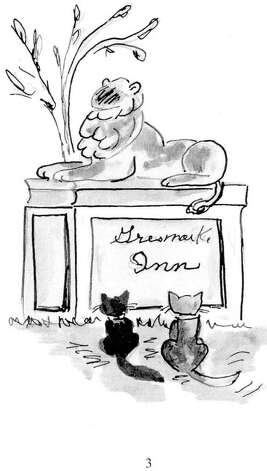
Seventy-five-year-old author and illustrator, Barbara Stretton, proud owner of seven cats, has been working toward her Tori Trotter series for years. She just released the third book in the installment called The Case of the Lurking Lion, where Trotter solves the mystery of a ghost feline outside of a local hotel. The series is targeted toward middle-schoolers and "cat lovers of all ages," according to today's article in Greenwich Citizen.

This delightful new series promotes quick-thinking, surprises, and a cast of unique characters, including Trotter's ridiculous sidekick, Scout, and a Maine Coon cat named Muffy. With all the slightly condescending middle-school reads out there, the Tori Trotter series is playful, smart, and doesn't take itself too seriously. Nor does the series' author.

"When I was assigned to write a guide for Bruce Hale's first Chet Gecko book," Stratton says of the equally lovely gecko-in-trenchcoat detective series, "I was struck by the hardboiled detective's voice and said to myself, 'I can do that. But my detective would be a cat.'"

To read student and teacher reviews of the new Tori Trotter series, check out the author's website.

Wednesday, January 4, 2012

Reduce Bullying With Books and Theater


Bullying in schools happens everywhere, everyday, and often times gets overlooked. A recent article in TYA Today (Theatre for Young Audiences Today) notes that each year, "3.7 million youth engage in bullying, and more than 3.2 million are victims of 'moderate' or 'serious' bullying.'" For many teachers, authors, and celebrities as of late, performing arts and literature have been two main ways to reduce harassment, or at least to teach kids possible solutions when faced with a bully.

Education.com, for example, encourages theater role-playing in the classroom and promotes several social justice performing arts organizations, who offer plays like You Didn't Do Anything! These groups perform plays which "depict the negative consequences of bullying...illustrate strategies to address bullying...and offer ways for children to either prevent or cope with bullying." Actors write and perform dramas to help kids better understand discrimination, intolerance, and sexism, and deal with those issues in a safe space.

On the other side of the spectrum, literature has been a main source for powerful anti-bullying messages. Books like Tomie DePaola's Oliver Button Is A Sissy and Andrew Clements Jake Drake Bully Buster give children and teens the opportunity to see strong characters overcome harassment. Even rapper 50 Cent, who used to write violent lyrics about dealing with abuse, has contributed to the literary cause. In June 2011, the rapper signed a deal with Penguin's Young Reader Group to pen a book called Playground, set to release later this month. The book follows a bully's point-of-view and "attempts to explore where the cycle of abuse begins," according to an article on MTV.com.

Whether it's written word on stage or in a library book, educators have begun to tackle harassment in schools and provide kids with helpful resources.

Sunday, January 1, 2012

A Tribute to the Chicago Public Library


As people use the last of their 2012 commemoratory fireworks, the Chicago Public Library system celebrates its 141st anniversary. Now with almost 80 locations around the city, CPL saw over 10 million visitors during last year alone. The community continues to grow. At 5,743,002 total books, the American Library Association declares the Chicago Public Library to be the 30th largest library in the nation.

Immediately after the Great Chicago Fire in October 1871, the first CPL building was built. London's A.H. Burgess and author Thomas Hughes put together what became known as the "English Book Donation." Burgess told the Chicago Tribune in December 1871: "I propose that England should present a Free Library to Chicago, to remain there as a mark of sympathy now, and a keepsake and a token of true brotherly kindness forever." The donation produced over 8,000 books (some from Queen Victoria herself) and the first CPL building was up and running.

In the years since its inception, the 70+ branches have provided reading programs, author events, literary workshops, children's interactive story time, discussion groups, and a lecture series. This past April, the Chicago Public Library joined other institutions around the country in the e-book transition. Since the spring, Chicago patrons have been able to check out a wide range of electronic novels, memoirs, essays, comic books, and cookbooks to their e-readers.

Besides its unique services, however, CPL also fulfills an overall need for the city's students. In November 2010, NPR released a story noting that "nearly one in four Chicago public elementary schools and more than fifty high schools don't have staffed, in-school libraries." While schools around the city struggle with resources, students can find both important books and a safe, secure study space in CPL locations. Similarly, students may partake in the libraries various free educational programs and seek the assistance of CPL librarians, even though their own schools may not have any of the above offerings.

From a workshop called "Introduction to Computers" to the latest e-copy of A Prayer for Owen Meany to a guest appearance by author Lowell Thompson, the Chicago Public Library system dedicates time and energy to best serving the needs of Chicago students, adults, and patrons.

Saturday, December 31, 2011

It's New Years Eve Again


I had every intention of steering clear of this holiday, of refraining from the "this is what 2011 was like" nostalgia, of doing any kind of "looking forward to 2012" thing. So hopefully this is not that. But considering last year on this day, I was walking back from Lake Michigan, soaking wet from falling through the ice, I needed to say simply this:

2011 changed everything. Since that day at Foster Beach, I have told both my grandmothers I'm gay, excommunicated myself from the Catholic Church, moved into my own apartment, joined a writing studio, been rejected from all seven graduate schools, reapplied at the last minute (which meant writing 90 pages in less than three weeks), watched my brother come out to my family, quit both my jobs, started writing full-time, learned to play the harmonica, chopped off all my hair into a Mad Men do, started a blog and a website, became a radio essayist with NPR, had an incredible partnership with a beautiful woman, landed an editorial internship with The Stranger, and planned a move to Seattle.

During that time, Steve Jobs passed away, Charlie Sheen went off the deep-end, and Osama bin Laden and Moammar Gadhafi were killed. There was an over-publicized royal wedding, under-publicized police brutality, and national protesters. We saw an American Snowpacalypse, a Japanese earthquake, and a Somalian famine. Every previous and current political figure was accused of sexual harassment. The News of the World closed. The 10 year anniversary of 9/11 passed. The remaining Iraqi troops were pulled. The phrase "debt-ceiling" was used more in 2011 than any other year in history combined.

It was all kinds of crazy, but the year really did kick a lot of ass. And everyone knows that the Mayans are right. We've got until December 21st to take risks, take chances, take trips, take opportunities, and give 'em hell. So 2012: bring it on.

Thursday, December 29, 2011

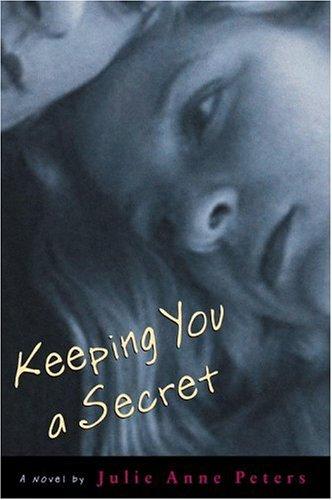
Book Review: Julie Anne Peters' "Keeping You A Secret"


Seventeen-year-old Holland Jaeger knows what will happen. She will get into one of the great colleges her mother has picked out, marry her boyfriend, Seth (who isn't so bad), and become a lawyer because that makes the most sense. But then Holland meets Cece Goddard, a queer transfer student and LGBT rights activist. Suddenly, Holland isn't sure of anything. Little does Holland know that her mother's suppressed homophobia and Cece's complicated past might transform everything. And does anyone really know what they want anyway? Among coming-of-age tales and the undergrad applications process, Julie Anne Peters' Keeping You A Secret also dives deep into the powerful consequences of bullying and dishonesty.

Structure: 4 out of 5 stars

The story follows Holland's senior year at Southglenn High School, from her introduction to art class and Cece to her relationships with her stepsister, boyfriend, and "friends," many of whom turn on her. The author maintains a constant momentum, with a straightforward plot and short chapters. While the story doesn't abound in too many twists and surprises, the few life-changing moments are potent, palpable, and heartfelt.

One of the strongest parts of Peters' novel was the way she showcased other minorities at Southglenn - the Goths, the punks, the performers. She even drew a nice parallel to Mrs. Jaegar's past. Instead of featuring a simple coming out story, the author presents the difficulties of acceptance through all types of teenage experiences.

Character: 4 out of 5 stars

Holland is fierce, sassy, and incredibly brave. She has spent her life shoved into the "model teenager" mold by her mother, her school counselor, and her boyfriend. Once she realizes the things she does want, Holland experiences an amazing shift. The same goes for Cece. As a character who appears fearless, she certainly has her fair share of skeletons in the closet (pun intended). Some of the outside characters confused me at times, however. Every so often, I felt unsettled by Holland's mom or Ms. Lucas, the school counselor. The two ladies would change personalities quite abruptly at various moments throughout the story, which sometimes felt in character and sometimes didn't. This was balanced out with the multitude of other secondary characters like Faith (Holland's Goth stepsister), Winslow (the orange-haired artist), and Leah (her nostalgic best friend), all of whom offer great support during Holland's journey and cause their own trouble along the way.

Voice: 4 out of 5 stars

The reader gets to see, hear, and feel Holland's story throughout the novel. As a seventeen-year-old, Holland has been given an immense amount of responsibility, and her narrative voice offers a maturity far beyond her years. I would have liked to see just a little more. While the author writes about Holland's gamut of emotions, there are some moments I would have loved to see fleshed out a bit further, like when Holland breaks her news to Seth, when Holland chooses a college, or even when Holland and Cece exchange their first "I love you." Her narrative voice is spot-on for her character - I just want to know more about her reactions. Overall, a great female protagonist.

Keeping You A Secret was first published in 2003 by Little, Brown and Company. The novel has received countless awards since its release, including the first ever Alphabet Award and a 2004 nomination for the American Library Association's Best Books for Young Adults.

The learn more about other Julie Anne Peters books, check out her website.