Wednesday, January 4, 2012

Reduce Bullying With Books and Theater


Bullying in schools happens everywhere, everyday, and often times gets overlooked. A recent article in TYA Today (Theatre for Young Audiences Today) notes that each year, "3.7 million youth engage in bullying, and more than 3.2 million are victims of 'moderate' or 'serious' bullying.'" For many teachers, authors, and celebrities as of late, performing arts and literature have been two main ways to reduce harassment, or at least to teach kids possible solutions when faced with a bully.

Education.com, for example, encourages theater role-playing in the classroom and promotes several social justice performing arts organizations, who offer plays like You Didn't Do Anything! These groups perform plays which "depict the negative consequences of bullying...illustrate strategies to address bullying...and offer ways for children to either prevent or cope with bullying." Actors write and perform dramas to help kids better understand discrimination, intolerance, and sexism, and deal with those issues in a safe space.

On the other side of the spectrum, literature has been a main source for powerful anti-bullying messages. Books like Tomie DePaola's Oliver Button Is A Sissy and Andrew Clements Jake Drake Bully Buster give children and teens the opportunity to see strong characters overcome harassment. Even rapper 50 Cent, who used to write violent lyrics about dealing with abuse, has contributed to the literary cause. In June 2011, the rapper signed a deal with Penguin's Young Reader Group to pen a book called Playground, set to release later this month. The book follows a bully's point-of-view and "attempts to explore where the cycle of abuse begins," according to an article on MTV.com.

Whether it's written word on stage or in a library book, educators have begun to tackle harassment in schools and provide kids with helpful resources.


Sunday, January 1, 2012

A Tribute to the Chicago Public Library


As people use the last of their 2012 commemoratory fireworks, the Chicago Public Library system celebrates its 141st anniversary. Now with almost 80 locations around the city, CPL saw over 10 million visitors during last year alone. The community continues to grow. At 5,743,002 total books, the American Library Association declares the Chicago Public Library to be the 30th largest library in the nation.

Immediately after the Great Chicago Fire in October 1871, the first CPL building was built. London's A.H. Burgess and author Thomas Hughes put together what became known as the "English Book Donation." Burgess told the Chicago Tribune in December 1871: "I propose that England should present a Free Library to Chicago, to remain there as a mark of sympathy now, and a keepsake and a token of true brotherly kindness forever." The donation produced over 8,000 books (some from Queen Victoria herself) and the first CPL building was up and running.

In the years since its inception, the 70+ branches have provided reading programs, author events, literary workshops, children's interactive story time, discussion groups, and a lecture series. This past April, the Chicago Public Library joined other institutions around the country in the e-book transition. Since the spring, Chicago patrons have been able to check out a wide range of electronic novels, memoirs, essays, comic books, and cookbooks to their e-readers.

Besides its unique services, however, CPL also fulfills an overall need for the city's students. In November 2010, NPR released a story noting that "nearly one in four Chicago public elementary schools and more than fifty high schools don't have staffed, in-school libraries." While schools around the city struggle with resources, students can find both important books and a safe, secure study space in CPL locations. Similarly, students may partake in the libraries various free educational programs and seek the assistance of CPL librarians, even though their own schools may not have any of the above offerings.

From a workshop called "Introduction to Computers" to the latest e-copy of A Prayer for Owen Meany to a guest appearance by author Lowell Thompson, the Chicago Public Library system dedicates time and energy to best serving the needs of Chicago students, adults, and patrons.

Saturday, December 31, 2011

It's New Years Eve Again


I had every intention of steering clear of this holiday, of refraining from the "this is what 2011 was like" nostalgia, of doing any kind of "looking forward to 2012" thing. So hopefully this is not that. But considering last year on this day, I was walking back from Lake Michigan, soaking wet from falling through the ice, I needed to say simply this:

2011 changed everything. Since that day at Foster Beach, I have told both my grandmothers I'm gay, excommunicated myself from the Catholic Church, moved into my own apartment, joined a writing studio, been rejected from all seven graduate schools, reapplied at the last minute (which meant writing 90 pages in less than three weeks), watched my brother come out to my family, quit both my jobs, started writing full-time, learned to play the harmonica, chopped off all my hair into a Mad Men do, started a blog and a website, became a radio essayist with NPR, had an incredible partnership with a beautiful woman, landed an editorial internship with The Stranger, and planned a move to Seattle.

During that time, Steve Jobs passed away, Charlie Sheen went off the deep-end, and Osama bin Laden and Moammar Gadhafi were killed. There was an over-publicized royal wedding, under-publicized police brutality, and national protesters. We saw an American Snowpacalypse, a Japanese earthquake, and a Somalian famine. Every previous and current political figure was accused of sexual harassment. The News of the World closed. The 10 year anniversary of 9/11 passed. The remaining Iraqi troops were pulled. The phrase "debt-ceiling" was used more in 2011 than any other year in history combined.

It was all kinds of crazy, but the year really did kick a lot of ass. And everyone knows that the Mayans are right. We've got until December 21st to take risks, take chances, take trips, take opportunities, and give 'em hell. So 2012: bring it on.

Thursday, December 29, 2011

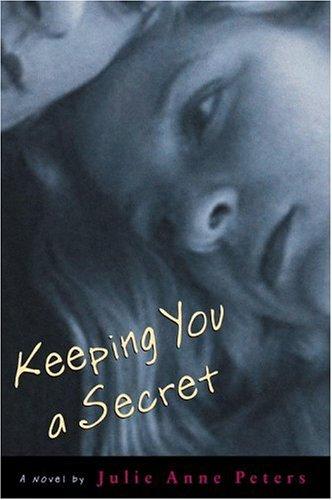
Book Review: Julie Anne Peters' "Keeping You A Secret"


Seventeen-year-old Holland Jaeger knows what will happen. She will get into one of the great colleges her mother has picked out, marry her boyfriend, Seth (who isn't so bad), and become a lawyer because that makes the most sense. But then Holland meets Cece Goddard, a queer transfer student and LGBT rights activist. Suddenly, Holland isn't sure of anything. Little does Holland know that her mother's suppressed homophobia and Cece's complicated past might transform everything. And does anyone really know what they want anyway? Among coming-of-age tales and the undergrad applications process, Julie Anne Peters' Keeping You A Secret also dives deep into the powerful consequences of bullying and dishonesty.

Structure: 4 out of 5 stars

The story follows Holland's senior year at Southglenn High School, from her introduction to art class and Cece to her relationships with her stepsister, boyfriend, and "friends," many of whom turn on her. The author maintains a constant momentum, with a straightforward plot and short chapters. While the story doesn't abound in too many twists and surprises, the few life-changing moments are potent, palpable, and heartfelt.

One of the strongest parts of Peters' novel was the way she showcased other minorities at Southglenn - the Goths, the punks, the performers. She even drew a nice parallel to Mrs. Jaegar's past. Instead of featuring a simple coming out story, the author presents the difficulties of acceptance through all types of teenage experiences.

Character: 4 out of 5 stars

Holland is fierce, sassy, and incredibly brave. She has spent her life shoved into the "model teenager" mold by her mother, her school counselor, and her boyfriend. Once she realizes the things she does want, Holland experiences an amazing shift. The same goes for Cece. As a character who appears fearless, she certainly has her fair share of skeletons in the closet (pun intended). Some of the outside characters confused me at times, however. Every so often, I felt unsettled by Holland's mom or Ms. Lucas, the school counselor. The two ladies would change personalities quite abruptly at various moments throughout the story, which sometimes felt in character and sometimes didn't. This was balanced out with the multitude of other secondary characters like Faith (Holland's Goth stepsister), Winslow (the orange-haired artist), and Leah (her nostalgic best friend), all of whom offer great support during Holland's journey and cause their own trouble along the way.

Voice: 4 out of 5 stars

The reader gets to see, hear, and feel Holland's story throughout the novel. As a seventeen-year-old, Holland has been given an immense amount of responsibility, and her narrative voice offers a maturity far beyond her years. I would have liked to see just a little more. While the author writes about Holland's gamut of emotions, there are some moments I would have loved to see fleshed out a bit further, like when Holland breaks her news to Seth, when Holland chooses a college, or even when Holland and Cece exchange their first "I love you." Her narrative voice is spot-on for her character - I just want to know more about her reactions. Overall, a great female protagonist.

Keeping You A Secret was first published in 2003 by Little, Brown and Company. The novel has received countless awards since its release, including the first ever Alphabet Award and a 2004 nomination for the American Library Association's Best Books for Young Adults.

The learn more about other Julie Anne Peters books, check out her website.

Monday, December 26, 2011

Book Review: Jeffrey Eugenides' "The Marriage Plot"


If the literary world needed to wait nine years after Middlesex to read another Jeffrey Eugenides stroke of genius, The Marriage Plot is certainly worth it. The book follows Madeleine Hanna, Mitchell Grammaticus, and Leonard Bankhead, who all left for an undergraduate degree at Brown University in the 1980s. Madeleine, a Victorian literary nut, declares a personal "no men" rule, while heavily researching love, relationships, and marriage circa Jane Austen for her senior thesis. Mitchell, of course, falls in love with Madeleine and explores religion while trying to win her over. But Mitchell is no competition for Leonard, an up-and-coming scientist, who attempts to woo Madeleine over the microscopes in the Chem lab. While the initial setting could easily describe a grocery store chicklit paperback, Eugenides transforms the cliche "love triangle" into a modern, biting, and fresh new look at brain vs. heart. From beginning to end, The Marriage Plot delivers new ideas about everything from feminism to parental relationships to the big post-graduation question mark of "What do I do now?"

Structure: 5 out of 5 Stars

As per Eugenides style, the author introduces central events early on, giving the reader a false confidence in predictions for future chapters. The plot, of course, unravels and those predictions are turned upside down, leaving the reader pleasantly surprised and eager for more. The author introduces main characters, then jumps to flashbacks and unfolds each character's history, as well as the stories of each mother, father, sister, and friend. Then the novel continues with Madeleine, Mitchell, and Leonard. By the time the reader closes the book on page 406, she/he will likely feel like they have invested in a satisfying history lesson rather than a fictional tale. Chapters vary from short to long, and the book is broken into five main sections. The plot comes full circle multiple times and touches on the "marriage plot" idea from every angle. Great structure. Great plot. Great book.

Character: 5 out of 5 stars

Not a single complaint. Madeleine, Mitchell, and Leonard are well-constructed, experience severe transformations, and finish the novel with dignity. No holes are left unfilled or any nagging questions left unanswered. While the story doesn't leave the reader unfulfilled, it certainly provides a desire for more. Both the plot and characters end with endless possibilities for sequels, though, on its own, the book stands well.

Voice: 5 out of 5 stars

The three narrators are easily distinguishable by character traits, mannerisms, and personalities within the first line each one speaks. Madeleine, Mitchell, and Leonard share a strong intellectual brain and yet differ greatly in their individual journeys. Each character voice and story is incredibly compelling. The reader can be knee-deep in Leonard's mind battle while he runs through the streets of Cape Cod, and then in just a paragraph, quickly get sucked into Mitchell's inner anguish over Mother Teresa from his hotel in India.

The book, overall, is witty, sarcastic, and endearing. Eugenides examines that ultimate idea of "the marriage plot" in many specific and general ways. I would highly recommend this novel to all readers, YA and otherwise. The Marriage Plot was published by Farrar, Straus & Giroux in October 2011 and shouldn't be missed!

Tuesday, December 20, 2011

A College Experience: Dorms, Finals, Running A Publishing House


At the University of Wisconsin-Stevens Point, students have been hard at work across campus studying for finals, packing for the holiday and, for some, publishing books through the college's indie publishing house, Cornerstone Press. Since 1984, the UWSP's company has been publishing novels from every genre: cookbooks, poetry, non-fiction, YA lit. Save an overseeing supervisor, Cornerstone Press is entirely run by students enrolled in English 349: Editing and Publishing.

What began in the 70s as a simple course about copy editing quickly turned into a full-blown press initiative. In 1984, professor Dan Dietrich transformed English 349 into an opportunity for students to edit, design, produce, market, and sell new releases. Authors from all over the country can now submit proposals for graphic novels, children's books, and memoirs. Then, twice a year, English 349 students choose one script to publish. After a contract is negotiated with the new author, the publishing process begins.

Cornerstone Press' latest Whipped, Not Beaten (writer Melissa Westemeier's satire on relationships) marks the organization's 31st published book. The novel was released early December 2011. Other CP publications include New York Times bestselling author Patrick Rothfuss' first book, Your Annotated, Illustrated College Survival Guide, Volume I (published by Cornerstone Press in 2005).

To submit a script to Cornerstone Press, check out the Submissions tab on the website or the publishing house's Facebook page.

Saturday, December 17, 2011

Sexism. Stereotypes. Ignorance. #NotBuyingIt

This holiday season, apart from buying local and scouring for last-minute bargains, many shoppers are on the prowl for other deal-breakers: degrading messages.

Earlier this year, the documentary Miss Representation played at the Sundance Film Festival. It spoke about the false idea which girls today have come to know - that they must rely on their looks and sexuality to be accepted. But the people behind the film have worked to get their voices heard in other ways. As an organization, MissRepresentation.org focuses largely on erasing labels and empowering women, and have started the Twitter hashtag #NotBuyingIt to raise awareness over brands, products, and advertisements which negatively distort women. The project was inspired by Girls For a Change, an organization that provides resources to help girls create social change.

Recently, major companies have altered products or taglines due to public complaints surrounding gender stereotypes. In September, JcPenny pulled a girl's shirt with the words "I'm too pretty to do my homework so my brother has to do it for me." The tee was targeted for 7-16 year olds. Shortly thereafter, Forever 21 discontinued the sale of a shirt which read "Allergic To Algebra." For weeks, MissRepresentation.org has encouraged shoppers to report back on similarly offensive sweaters, coffee mugs, calendars, posters, and store displays. Their #NotBuyingIt project is intended to build on the recent media awareness in advertising.

December 12th tweet: "Why does RedEnvelope.com offer office & travel gifts for only men? No suggestions for prof women #NotBuyingIt"

December 18th tweet: "Just saw a mug with a 50s housewife saying 'medicated and motivated' #NotBuying It"

The cause, however, is not just about a Macy's sweatshirt or a winter boot ad - MissRepresentation.org hopes to move our society in a new direction. "We've already heard from mothers in New York who've had billboards removed and young people everywhere who are creating media literacy clubs at their schools," the company's blog states. "These actions are making a difference and building momentum towards shirting our entire culture."

If you see misrepresentations of women during holiday shopping, please post to #NotBuyingIt. Let's raise awareness!

Thursday, December 15, 2011

Book Review: Cheryl Rainfield's "Hunted"


If I could picture the mash-up between Suzanne Collins' The Hunger Games and Stephen King's Carrie, it would be Cheryl Rainfield's Hunted, which was released today. Teenage Caitlyn and her mother are on the run from the government because Caitlyn is a Para (as in, paranormal). As a telepath, she is among many other Paras with a list of extraordinary talents, all of whom are shunned as societal menaces. While on the run, Caitlyn tries to lay low in a major city, but instead finds herself deep in an underground plot. She needs to decide whether or not to join the ranks, oppose the cause, or just keep running.

Structure: 4 out of 5 stars

Rainfield fluctuates between short and epic chapters, which creates a great environment for readers. The almost 400 page novel takes place over a matter of several action-filled weeks, with frequent flashbacks to the past. Caitlyn's story is jammed with layers of memories (both her own and the experiences of those around her), which are tackled chapter by chapter. At times, it is slightly difficult to distinguish between characters in memory sequences because Caitlyn hears so many different thoughts, but overall, a great set-up. The action keeps the reader engaged and the chapters create the ideal amount of anticipation.

Character: 4.5 out 5 stars

Caitlyn is fierce, brave, and witty - everything I love in a female protagonist. The reader sees the main character not only fend for the rights of her fellow Paras, but also for other minorities at school, the less represented ethnic groups, the queers, and even the quiet kids. As a leader, Caitlyn's biggest flaw is her desire to help too many people at once. But readers love her from the first moment. The feminist in me was only slightly perturbed by the way the protagonist falls so quickly in love with the captain of the swim team, Alex, and the way Caitlyn, at first, turns to him to make everything better. But the two swiftly become an equal pair and seek the support of each other during difficult struggles.

In the same way, the feminist in me was delighted to see the secondary story of Rachel, an out and proud lesbian who stands up for Para rights. I would have liked to see more of Rachel as a character, but I look forward to her story in a possible sequel(?). As for the cast of characters, Rainfield offers an outstanding set of powerful female roles: Caitlyn, her mother, Rachel, Mrs. Vespa (the badass librarian), and even Irene, the manipulating enemy from the other side.

Voice: 5 out of 5 stars

Rainfield has mastered character voices in this novel. Though Caitlyn is the sole narrator, the main character also reads minds and hears thoughts. So, in an incredibly unique way, the author presents an indefinite number of character voices, histories, memories, and experiences, all told through Caitlyn, who can see and feel it all. The reader learns about Caitlyn's brother, Rachel's parents, Alex's mother, the girl in Social Studies, the two boys walking down the hall, and the motel owner, all within the confines of Caitlyn's thoughts. A refreshing take on multiple character voices, and one Rainfield writes very well.

As a whole, Hunted is powerful, surprising, adventurous, and heartfelt. I recommend it to those interested in the supernatural, and anyone who can relate to a really complicated high school experience.

Hunted was published by WestSide Books. It released today in the U.S. and is scheduled for a Canadian release in January.

Tuesday, December 13, 2011

The "Obvious" Answer To Controversy? Avoid Real Life.


LGBT-themed YA books have certainly seen their share of disputes, and topics like alcohol abuse, sex, and really anything Judy Blume ever wrote about have endured an equal amount of argument among teachers, librarians, and parents. For some, these topics in general are just "too dark" for young adults.

The Wall Street Journal recently posted an article relaying the apparent horrors in today's YA lit. "If books show us the world," reporter Meghan Cox Gurdon says, "teen fiction can be like a hall of fun-house mirrors, constantly reflecting back hideously distorted portrayals of what life is." Drugs. Incest. Dysfunctional families. The article insists authors try to reverse this trend, and go back to books where topics weren't as violent. Without change, she believes today's YA audience will be in trouble. "If you think it matters what is inside a young person's mind, surely it is of consequence what he reads," Gurdon continues.

Yes, and by hiding life topics from teens, youth won't possibly encounter controversial issues in film, television, the Internet, and in real life. Let's make sure to get rid of a safe learning environment, and prevent the opportunity for teens to ask questions.

(The article goes on to list two recommended reading lists: 1) Books For Young Men and 2) Books For Young Women. Because apparently recommending books to both genders is too much.)

Of the many dark topics that some adults hope to keep quiet from teens, a prominent controversial theme is suicide. As such, author Michael Thomas Ford's Suicide Notes met doubtful readers in 2008. The book follows a teenager named Jeff through a psych ward after his failed attempt at taking his own life. Jeff, struggling with his identity and sexuality, meets a group of young adults who have all survived intended suicides. Ford successfully navigates both the topics of homosexuality and suicide in a way I hope other authors attempt; he treats each issue as a complex idea, rather than diseases that the protagonist tries to hide. As Teen Ink says, "Suicide Notes is able to make something beautiful from something normally regarded with hesitation or disdain." Instead of avoiding the two complex issues altogether, as Gurdon suggests, Ford shows his readers that life involves challenges, and there are healthy, available solutions.

Gurdon's article exploded throughout the media when it was published in June 2011. Authors, bloggers, teens, and adults alike viciously opposed Gurdon's ideas. Author Jay Asher (Thirteen Reasons Why, also a suicide-themed novel) explains that it's not about censorship or pride. "For writers," Asher says, "it's not that. [A lot of adults] don't understand the power of books dealing with these subjects." Both Ford and Asher try to show hesitant readers that knowing how the world works provides the opportunity to learn and understand. "It doesn't mean that your teen is going to be facing these things just because they're reading about them," Asher says.

If YA is a crucial resource for teens, to suggest censorship or sugarcoating topics is only a disservice. Authors and activists have been working to keep Gurdon's recommendations out of literature for good.

Recent controversial YA books to check out
(just to stick it to the man)...
But I Love Him by Amanda Garcia
Lie by Caroline Bock
Shine by Lauren Myracle

Sunday, December 11, 2011

Time After Time, Lauper Offers Resources for Queer Teens


With a tip of her hat towards Dan Savage's It Gets Better project, songwriter and LGBT activist Cyndi Lauper has created a similar project called the Give a Damn campaign. The artist sought a means to both raise awareness about issues concerning gay teens and educate viewers of all sexualities on how to help.

The Give a Damn Campaign was founded in April 2010. The website contains statistics, articles, and information on the biggest problems LGBT teens face, like homelessness, abandonment, and bullying. "Imagine sending your child off to school everyday, knowing once they're there, they'll be called names, get threatened and shoved, even kicked or punched," the website asks of straight/non-questioning viewers. "Imagine if your brother or sister, or your nephew, niece, grandson or granddaughter told their teachers about the bullying - and their teachers didn't do a damn thing about it." Unlike other teen issue webpages, the Give A Damn site takes the conversation a step farther - it speaks widely to both struggling youth and unknowing citizens and provides a wealth of information for anyone interested in LGBT topics. It provides a means to help, though conversation starters, places to volunteer, and ways to donate.

Perhaps the most helpful link for visiting teens, however, is the "Personal Stories" section of each page. Young adults from every background have submitted their battles with parents, teachers, peers, and society. On the "Youth Homelessness" tab, a boy named Ryan describes the ongoing fight with his family. Ryan's parents verbally and emotionally abused him, related his existence to that of a child with Down Syndrome, and forced him into a conversion therapy organization called the National Association for Research and Therapy of Homosexuality to be "cured." On the campaign's site, Ryan pleads with viewers: "The lives of your friends, that kid down the street, your brother, sister, mom, dad, aunt, uncle or 6th cousin twice removed, count on you, so please, join all of us, and Give a Damn."

In a similar fashion to It Gets Better, Lauper extends the project into a Youtube channel where celebrities and fellow activists can upload clips about supporting youth who are enduring hate crimes, unfriendly faces, and a sense of loss. "It is time that life, liberty and the pursuit of happiness is afforded to everyone equally," the channel states. "Get Informed. Get Involved. Give a Damn!"

To donate to Give a Damn, please click here.