Tuesday, March 27, 2012

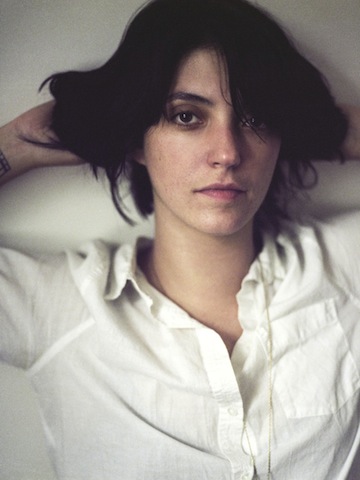
Powerfully Adorable: A Review of the Sharon Van Etten Concert

"It's really hard to sustain a note on a full stomach because I'm afraid I'll burp into the microphone," Sharon Van Etten said to a packed house of queer couples, single ladies in flannel button-ups, and groups of middle-aged hipsters at Neptune Theatre Sunday night.

Opening for the petite Brooklyn-based singer/songwriter with a booming, grainy voice was Philadelphia band War on Drugs - four gentlemen with a swarm of echoing synthesizer sounds that, combined with constant blue lights overhead, made the Neptune feel like a fish tank. Adam Granduciel (lead vocals/guitar) and Robbie Bennett (keyboard) sported trendy Jesus-length haircuts, and all four had a great sense of humor. Granduciel began to tease David Hartley (bassist) about his family in Seattle. "You're from around here, right? In Poulsbo?" he asked Hartley. The bassist (along with half the crowd) scoffed at Granduciel's geography skills. War on Drugs played for a good hour in their bizarre, aquatic way before Van Etten finally took the stage.

Apart from her intimidating vocal power, Van Etten is otherwise downright adorable. The 31-year-old giggled and palled around with her band mates and the crowd and, though she's been performing for most of her life, appeared almost nervous on stage. "Like I'm supposed to remember all my songs?" she joked when she forgot the set list three songs into the show. Her guitarist climbed over two amps to whisper the next title into her ear.

Van Etten's good-natured, awkward demeanor was endearing and instantly won over the crowd as she answered the questions folks shouted from the audience. For example:

Random person: "Do you like cats?"
Van Etten: "Cats? I love cats."
Same person: "I love you!"
Van Etten: "I love you, too, beautiful stranger."

At one point, a fan pushed his way to the front and set a flower onstage. Van Etten stopped playing to go pick up the flower and slide the stem through her guitar strings. "This song is now for that guy," she said before continuing with the swooning, mesmerizing voice and gut-wrenching lyrics of her latest album, Tramp.

Van Etten's drummer is the tallest man alive. Even seated, he towered over Van Etten's tiny standing frame. Part way into the set, her lead guitarist pulled out a violin bow and continued to play his guitar without missing a note. But the real treat was the lady sharing the stage with Van Etten, who switched from back-up vocals to guitar to bass to keyboard to the occasional tambourine, and the two fierce female voices took over the audience. Their harmonies swelled and swayed, particularly on songs like "Tornado" and "One Day." Together, they wooed the crowd long into the evening.


(My review also appears online at The Stranger.)

Tuesday, March 20, 2012

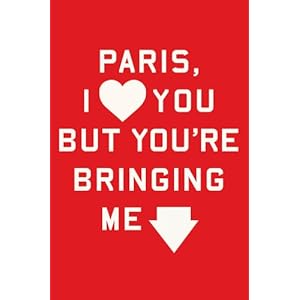
Book Review: Rosecrans Baldwin's "Paris, I Love You But You're Bringing Me Down"

First off, I picked up this book and saw that the author's first name was Rosecrans. Therefore, the book couldn't possibly be bad, right? Well, I was partly correct.

Rosecrans Baldwin wrote a bitchin' debut novel in 2010 called You Lost Me There, about a baller Alzheimer's researcher named Dr. Victor Aaron who discovers that he and his late wife remembered their marriage very differently. The brilliant memory specialist must go back through his own memories to figure out what is real and what is make believe. The book won several awards and was on NPR's Best Books of 2010 list.

Paris, I Love You But You're Bringing Me Down is smart, funny, and engaging, but doesn't quite live up to the You Lost Me There hype. Paris describes Baldwin's true story of moving to his dream city with his wife, Rachel. The two Americans must endure the language barrier, the culture shift, the coffee, the streets, the driving, the rules about kissing, the cab fare, and more. Baldwin's voice is strong and he isn't full of himself. When he makes mistakes, he admits them. In fact, his minor (and major) screw-ups are what make the book so entertaining. One of Baldwin's most frequent mishaps is, of course, his struggles with learning French:

"You can also try rendering American idioms into French. Coworkers will stand flamingo-still when you so casually drop Moi, je ne donne pas une merde (I don't give a shit). Because other people might pass along feces as gifts, but never you, cool you."

His descriptions are spot-on and his adventures make the reader want to hop the next plane to France. The story is certainly genuine - it just lacks a sense of urgency, a sense of "keep reading," a sense of "Oh my God, I can't put this down." Perhaps the switch from fiction to non-fiction is what makes the book slightly less satisfying, or maybe You Lost Me There is simply too good to be topped just yet. Either way, Paris is worth the read, but isn't necessarily a must-read. An interesting connection, however, is the secondary story line in Paris. Besides battling the French culture, Baldwin was trying to get his first book published: You Lost Me There. The book-within-a-book thing is typically campy, but works well here.

Paris, I Love You But You're Bringing Me Down will be published on April 24th by Farrar, Straus, and Giroux.

Friday, March 16, 2012

The Q Review x2

The Q Review, a Chicago literary magazine, published another one of my essays in their March issue. Check it out here!

As an organization, The Q Review is a great platform for LGBT artistic community sharing. Their mission statement says it all:

OUR MISSION is to provide a platform for queer art and expression. We want to bring queer voices together as a collection of voices, as a deafening roar and unite LGBTQ artists under one title, one website, one letter: Q.

We chose “Q” because we aim to include everyone. “Q” literally stands for Queer, the all-inclusive identifier from the alphabet soup, LGBTQ. So whether you write poetry, or create graphic illustrations – gay, lesbian, or simply queer – your voice is welcome inside The Q Review.

We intend to bring the greater Chicago area and the rest of the world a formal, regular, and cohesive publication to spread queer thought, creativity, and to nourish the growth of the queer arts community as a whole.

Monday, March 12, 2012

Film Review: Paul Weitz's "Being Flynn"

When Nick Flynn (Paul Dano) walks into his deadbeat father's living room after not seeing him for eighteen years, Jonathan Flynn (Robert De Niro) greets him by stepping out of the bathtub, baring his ass, and boasting about his manuscript. "Everything I write is a masterpiece," Jonathan continuously tells Nick during Being Flynn, which is based on Nick Flynn's 2004 memoir (originally titled Another Bullshit Night In Suck City. The title switch must have sucked as well). Both father and son are failing at life. Miserably. The latter is aware of this; the former is not. The movie is told from both perspectives - Jonathan spends the film talking about his novel, while Nick writes a novel about his father. Though broken and disgruntled, the men charge through their respective stories, reeking of cheap vodka and poorly made leather jackets.

The script is smart and quick-witted. Little direct dialogue is taken from the book, but the events - particularly the homeless shelter where Nick works - are still vividly captured. As characters, Nick and Jonathan make a great pair of stubborn relatives - both convinced that the other is the reason life blows in "suck city." As actors, Dano and De Niro are good together. Dano's gangly awkwardness is simultaneously comical and natural in contrast to the nonchalant De Niro. But Julianne Moore dominates. She plays Dano's badass single mom, and her performance alone is a reason to see the movie.

Being Flynn was directed by Paul Weitz and hits theaters this week.


(My review is also featured in the March 14, 2012 issue of The Stranger)

Photo credit: www.metrosource.com

Monday, March 5, 2012

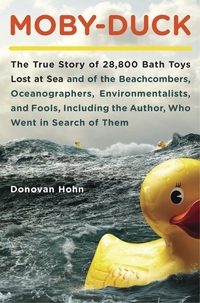
Book Review: Donovan Hohn's "Moby Duck"

Writer Donovan Hohn uses Ernie’s Sesame Street “Rubber Duckie” tune in his latest, Moby Duck, to introduce a bizarre news event of 1992. In January, a shipment of toys was en route from Hong Kong to Tacoma, WA when the ship was caught in a storm. Much of the cargo – including 28,800 plastic animals (most notably, 7,200 rubber ducks) – fell overboard in the accident. The occurrence was never reported (due to liability). Then, starting in 2003, rubber ducks began showing up on the shores of Seattle, different beaches throughout California, Alaska, and, somehow, Maine. One way or another the ducks not only survived, but ended up on beaches all over the country, then later, the world.


Hohn was a high school English teacher when he first heard about the rubber duck phenomenon. While he had never before worked in the fields of science, oceanography, or environmentalism (nor knew anything about beachcombers), Hohn became obsessed with the string of events that led to the rubber duck spill, as well as the accident’s aftermath.


He writes in both a fiction and non-fiction manner. On the one hand, Hohn explains the trials and tribulations of one wide-eyed explorer of the unknown, “a near-sighted, school-teaching, would-be archaeologist of the ordinary,” but also examines the intricate details of oceanography, polyethylene (the most commonly used plastic), and other chemicals that have slowly been poisoning the earth’s water supply.


The style and subsequent editing of the book is puzzling, however. In some ways, Hohn transforms an incredibly dry subject (for some) into a thriller, a mystery, and an action-packed drama. But his sentence structure is a bit like Yoda from Star Wars:


“I also liked them because I have since childhood found natural history more enchanting than nature, whatever that was.”


The book itself is also unnecessarily long. Hohn’s discoveries are interesting, and the reader appreciates a quick explanation of the fancy science jargon, but the story feels like Hohn never decided whether to write a book about his life or a book about neat scientific things. There is too much of both.


The quirky one-liners are worth it, though, and Hohn’s story is, of course, extraordinary. Plus, aside from the bizarre sentence structure, the man can definitely write:


“Wildly out of scale and dyed a lurid, maraschino red, the beaver seems altogether out of place in this menagerie, a mammalian interloper from somebody’s acid trip.”


More than, anything, however, Hohn’s story feels real. On top of the many complications he faced on his journey, Hohn was on the brink of first-time parenthood when he began his research. His struggles with parenting, paired with his fear of sharks and complete submission to the unknown, makes his writing relatable, as well as memorable.


Moby Duck was published on February 28, 2012 by Penguin Books.


Photo credit: www.brainpickings.org

Tuesday, February 28, 2012

On the Prowl for Queer Youth Space

In Seattle, the Capitol Hill area is well-known for its LGBT community. Gay-friendly bars, clubs, bookstores, theaters, music venues, and events scatter the blocks along Pike and Pine. Rainbow flags flutter from many windows of both businesses and homes. But in the welcoming community, a group of individuals feel out of place: young adults.

As a recent article on GoPride.com states, "With so much of the [Seattle] community based in spaces with age limits, alcohol, or costly admission, many events and networking opportunities systematically exclude youths." While more and more youth are coming out at younger ages, fewer and fewer have a central place to celebrate pride in Seattle. Thus the Queer Youth Space project began in 2009.

Unlike the nearby Lambert House - "a safe place for queer youth ages 22 and under", which has provided shelter and resources for struggling LGBT teens since the 1980s - the QYS seeks a place for social community building and events. Kyle Rapinian, who was eighteen when he began the project, set the ball rolling.

After a three-hour forum in 2010, where fifteen youth met to discuss the space problem and related issues, Rapinian set up weekly meetings to put together the QYS goals, set a plan, and begin the resource search. From there, the "Three Wings" idea became official. Three Wings (TW) refers to the name of the coveted new free center for young adults, and was named for the three main goals of the space itself:

1) Cultural Activism Lab: a venue for different kinds of food, art, and culture, and rooms for performances, classes, and community events.

2) Wellness Collaborative: a set of resources (like counselors, peer advisors, academic assistance, and health/legal guidance) to address problems for LGBT youth.

3) Research & Education Institution: a collection of leaders who promote and advocate necessary change in the community.

Mainly, however, the QYS group wants to fight boundaries and open doors. As their website states: "Physical space allows us to challenge entrenched heterosexism in more powerful ways. What the space's form promises to be is something very special and very queer: a space that (by definition) cannot be measured, traced, or pinned down."

In June 2010 (after a 60+ page proposal), QYS was awarded a Large Project Fund grant and the hunt for space began. Since then, the group has tried to obtain at least eight different facilities, but have been met with bad luck, unyielding landlords, buildings lacking wheelchair accessibility, and other frustrating issues.

But Rapinian and company haven't given up. The search continues and the plan hasn't changed. Once a space is secured, the group believes it will only be a matter of months before Three Wings is open, free, and available to "provide queer youth with opportunities to build communities."

To donate to the Queer Youth Space project, click here.

Photo credit: www.capitolhillseattle.com

Thursday, February 23, 2012

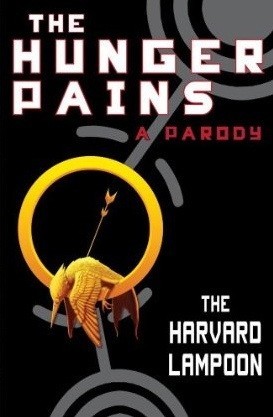
Book Review: Harvard Lampoon's "The Hunger Pains"

For readers sporting "Team Peeta" t-shirts, The Harvard Lampoon's The Hunger Pains might produce a few more laughs, but even those without extensive knowledge of Suzanne Collins' now infamous Hunger Games trilogy can enjoy the outright ridiculous humor in the February 2012 novel.

Because the book is written in jest and parody, commenting on the novel's literary merit would be equally hilarious. But the creativity of the characters, plot, and setting more than make up for any boring sentence structure. The book follows Kantkiss Neverclean, a klumsy, scatterbrained, foolish teenager, who was involuntarily volunteered to compete in the yearly Hunger Games (a competition that began as a hotdog eating contest). She and Pita Malarkey (an obese and whiny Pillsbury Doughboy) are shipped to Disneyland and forced into the games. Effu Poorpeople (an upscale version of Effy Trinket) and Buttitch Totalapathy (a gambling-crazed Haymitch Abernathy) accompany the tributes on their journey.

Perhaps the most refreshing aspect of Hunger Pains is the total tongue-in-cheek dialogue. Take President Mark Bernette, for example (yes, as in the incorrectly spelled name of the British producer of Celebrity Apprentice and Survivor). After the President assures the tributes that they can leave at any time, an officer rushes to whisper into Bernette's ear. The President then turns to the crowd, clears his throat, and laughs. "Sorry, sorry, I was thinking of something else. You can only leave if you die."

Alright. Let's be honest. Some parts of the book are overdone and cease being funny after the 300th reference. The most looming example? The way Kantkiss can't decide between Pita and Carol (a.k.a. Gale). Yes, the allusion is very funny, particularly because of the ongoing subtle love triangle in the real Hunger Games trilogy. But twice a page for an entire novel? Not funny anymore. The novel's shining aspects lie in actually subtleties, the various settings, the secondary plots, the character names that are off by just one letter (the Peacemakers from Games are the Pacemakers in Pains. C'mon, that's hysterical). In that way, the book is worth the read.

This isn't the first full-length novel Harvard Lampoon has published. While the company is most known for its long-running humor magazine, HL has also released such roll-your-eye classics as Nightlight (based on Stephanie Meyer's Twilight trilogy) and Bored of the Rings (based, of course, on J.R.R. Tolkien's Lord of the Rings). Harvard Lampoon has not announced any upcoming book releases, but will continue to publish five issues of the HL magazine annually. Past HL writers include comedians/writers Conan O'Brien and Andy Borowitz.

Wednesday, February 22, 2012

Sunday, February 19, 2012

Book Review: Peggy Orenstein's "Cinderella Ate My Daughter"

When Peggy Orenstein began her writing career, she wanted to help mothers prepare their daughters for an overly feminine culture. For years, she visited high schools, grade schools, and Girl Scout meetings to spread the word on avoiding gender stereotypes. But then Orenstein had a daughter of her own. In her latest, Cinderella Ate My Daughter: Dispatches from the Front Lines of the New Girlie-Girl Culture, Orenstein inspects feminine culture from a mother’s perspective, and speaks to the challenges of pursuing strong, independent images for girls across America, particularly for her own daughter, Daisy.


In Cinderella, the author looks at Disney Princesses, American Girls, and Barbies, all of which were originally rebellious counter-culture icons compared to the typical feminine images of their day but, over time, have only succumbed to the same old media-induced gender stereotypes. While Barbie first exemplified a strong, independent woman – a fierce and sassy flight attendant, nurse, and police officer – she now faces the problem many women continue to endure: “struggling to fulfill all the new expectations [society has] for them without letting go of the old ones.” In this way, Orenstein’s writing has a great sense of balance. She points out the red flags in girl’s activities and role models, but plays Devil’s Advocate as needed. Without being accusatory, the author presents the simple facts of why most so-called positive media heroines (like the tomboy Dora the Explorer) have ultimately given a negative or confusing message to girls (like when Dora became a princess anyway and started saying things like, “Vamanos! Let’s go to fairy land!”).


One of the most powerful aspects of Cinderella is the way Orenstein draws connections between genres, products, role models, and ideas. The author compares the way young girls play dress-up (in frilly dresses and boas) to emulate Snow White to the way young adolescents dress up (in mini skirts and fedoras) to emulate Miley Cyrus. And the main difference between the Little Mermaid and Rapunzel, according to Orenstein? The former literally gives up her voice for a man while the latter attracts a man with only her voice. MIND BLOWN.


Not to mention the statistics the author pulls to emphasize her horror – there are currently 26,000 Disney Princess items (pencils, t-shirts, dolls) for sale; pre-teen girls now spend over $40 million a month on beauty products; there were 12,000 injections of Botox administered to girls 13 to 19 in the year 2009 alone. Orenstein has built up a powerful argument regarding the detrimental relationship between the media and young women.


But girls, Orenstein discovers, are not the only ones set into rigid gender roles. In many ways, boys are stuck in just as many identity ruts. The author reminds readers that few serious role models exist for boys who want to dance, wear pink, or aspire to be a Disney Prince (or Princess). And, as Orenstein’s four-year-old daughter points out, “Did you know that girls can choose all kinds of things to wear, but boys can only wear pants?” While the author briefly touches on this double-edged sword of gender identity in the media (and, by extension, real life), she succeeds in teasing the reader with information, but doesn’t expand on her findings. Cinderella could surely continue for an additional 50 pages analyzing the effect of girly-girl culture on growing boys.


Overall, though, Orenstein powerfully dissects that tricky fine line of girly culture. Does removing Disney Princesses protect young girls from giving in to gender stereotypes, or teach girls that femininity – dresses, dolls, the color pink – are inherently bad? The author seeks to prove not only to Daisy, but to every toddler, tween, and teen out there that there are no “behavior[s] or toy[s] or profession[s]” that are unattainable for the female sex, nor “mandatory for [the female] sex.” Throughout Cinderella, Orenstein encourages gender-neutral freedom of choice for both girls and boys, be it the love of tutus or football jerseys.


Cinderella Ate My Daughter was published on January 25, 2011 by Harper.


(Look out for an extended version of my review in an upcoming issue of The Stranger)


Photo credit: www.goodreads.com

Wednesday, February 15, 2012

How They Met: An Interactive Social Experiment

In 2010, artist and director Ian Bell wanted to bring out the raw truth of day-to-day life in his city. He wanted people to experience Seattle through different eyes. The result: Seattle Confidential: Spill the Beans, Seattle!

To start, Bell set up dropboxes all over the city (physically and electronically) for people to both fill out survey questions and submit performance pieces based on a particular theme. Answers and submissions remain anonymous which, Bell hopes, will encourage more truthful material. "Seattle Confidential is...very personal in nature, like peering through a window into what defines ourselves and our city," Bell said in a recent press release. Before each new event, Bell collects responses and chooses the top writing samples. Then a group of the city's best actors perform the pieces in a staged reading-type setting and Bell presents the survey data, giving the audience an honest look at some fellow Seattle-ites. In this way, Bell refers to Seattle Confidential as "part interactive social experiment, part voyeuristic theatre event."

"How We Met," the newest theme in the quarterly series, was Monday, February 13. The evening featured seven unique stories ranging from an ex-prostitute's encounter with a former client to a man bereaving the loss of a good friend. In between segments, Bell presented the survey answers to questions like "Worst place to pick up a date?" and "Best place to have sex?" In an odd twist, the night's MC also asked audience members to take out their phones for live polling, and the room watched a projected graph of responses. For two hours, audience members read each other's answers, saw a snapshot of seven writers' lives, and wondered who among them just wrote "I'm Batman" on the screen as their favorite pick-up line.

"When you collect anonymous written submissions and surveys from the community, add local actors, plus the live electronic polling of the audience, you have a show that is uniquely and completely by Seattle, about Seattle, and for Seattle," Bell said.

Seattle friends - make sure to check out the Seattle Confidential website in the upcoming months to fill out survey questions or submit a writing piece.